What is PVC roofing and where is it used?
PVC roofing is a thermoplastic single-ply membrane used on flat and low-slope commercial roofs. It is commonly installed on restaurants, manufacturing plants, warehouses, retail buildings, and facilities where chemical, grease, or oil exposure is a concern. PVC is valued for heat-welded seams, strong waterproofing performance, reflective energy efficiency, and resistance to punctures, fire, and many industrial contaminants.
What are the benefits of PVC roofing for commercial buildings?
PVC roofing offers several advantages for commercial properties, including durable seam strength, excellent resistance to chemicals and grease, reflective surfaces that help reduce cooling loads, and strong puncture and tear resistance. It is especially useful for facilities with rooftop equipment, frequent maintenance traffic, or harsh operating conditions. Properly installed systems can also qualify for long manufacturer warranties.
How long does a PVC roof typically last?
A professionally installed PVC roof can deliver decades of service when matched to the building and maintained correctly. Engineered Roofing Systems installs manufacturer-backed systems with warranties up to 30 years, depending on the assembly and project scope. Longevity is improved by regular inspections, prompt repair of penetrations or flashing issues, and proper drainage management on flat commercial roofs.
Is PVC roofing a good choice for buildings with chemical or grease exposure?
Yes. PVC is one of the strongest options for facilities exposed to chemicals, oils, or grease, which is why it is often recommended for restaurants, food processing buildings, and certain manufacturing environments. Compared with many other roofing materials, PVC provides better resistance to these contaminants while maintaining waterproofing performance, making it a practical long-term solution for demanding commercial applications.
Can a PVC roof be installed over an existing roof?
In some cases, yes. A PVC system may be installed as part of a reroof or recover project if the existing roof condition, moisture levels, deck integrity, and code requirements allow it. A detailed inspection is needed first to determine whether recover is appropriate or whether full tear-off is the better long-term option. The goal is always to protect warranty eligibility and roof performance.
How is PVC roofing installed?
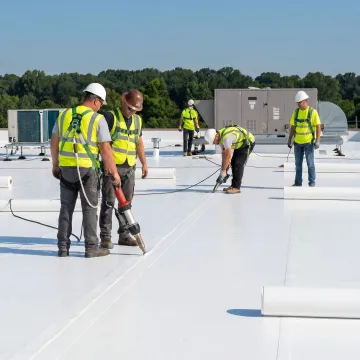
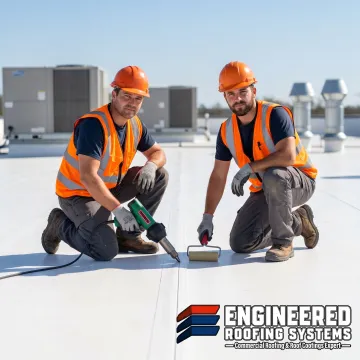
PVC roofing is typically installed using fully adhered or mechanically attached methods, depending on the building, deck type, wind requirements, and project goals. Seams are heat-welded to create a strong, watertight bond. Installation also includes substrate preparation, flashing details, penetration sealing, edge securement, and final inspection. Manufacturer-approved methods are essential for long-term durability and warranty compliance.
How much does PVC roofing installation cost?
PVC roofing costs are quoted after an on-site inspection because pricing depends on roof size, attachment method, insulation needs, tear-off requirements, access conditions, and detail complexity around drains, curbs, and penetrations. While PVC often has a higher upfront cost than TPO, many owners choose it for its chemical resistance, durability, and long-term value in demanding commercial environments.
Do you provide inspections before recommending PVC roofing?
Yes. Engineered Roofing Systems offers free, no-obligation commercial roof inspections across its Southeast Texas service area. The inspection reviews membrane condition, drainage, flashing, seams, penetrations, and signs of moisture intrusion. Clients receive a documented assessment with photos and practical recommendations, whether the best solution is PVC installation, targeted repair, restoration, or a different roofing system.