This guide walks building owners and facility managers through exactly what to look for, how to inspect systematically, how to assess severity, and what to do next. Whether you manage a warehouse, retail center, or manufacturing plant, understanding post-storm damage indicators protects your investment and keeps operations running.
Key Takeaways
- Storm damage shows up as membrane bubbles, ponding water, displaced flashing, dented HVAC units, and interior stains
- Start with ground-level and interior checks before accessing the roof surface
- Damage severity falls into three categories: minor, moderate, or severe
- Document everything immediately with photos and notes — insurance claims depend on it
- Hidden moisture needs professional detection tools — visual inspection alone isn't enough
Common Signs of Storm Damage on Commercial Roofs
Commercial roof damage rarely announces itself from street level. Flat and low-slope roofs (the standard for most commercial buildings) trap damage in ways pitched residential roofs don't. Water penetrates membrane seams, wind stress compromises hidden fasteners, and hail punctures create slow leaks that won't show up indoors for weeks. Systematic inspection is the only reliable way to catch problems before they multiply.
Wind Damage Indicators
Wind uplift affects commercial roofs differently than steep-slope systems. Look for:
- Lifted or torn membrane seams where wind got underneath the roofing material
- Displaced edge metal or coping along the building perimeter
- Missing fasteners or exposed fastener plates in mechanically attached systems
- Flashing pulled away from penetrations like vents, pipes, or HVAC curbs
The danger with wind damage is that the membrane surface can look completely intact while adhesion and fastener integrity underneath have already failed. You won't know until the next rain event, when water starts traveling through the insulation layer.
Hail Damage Indicators
Hail creates distinct damage patterns on flat commercial roofs:
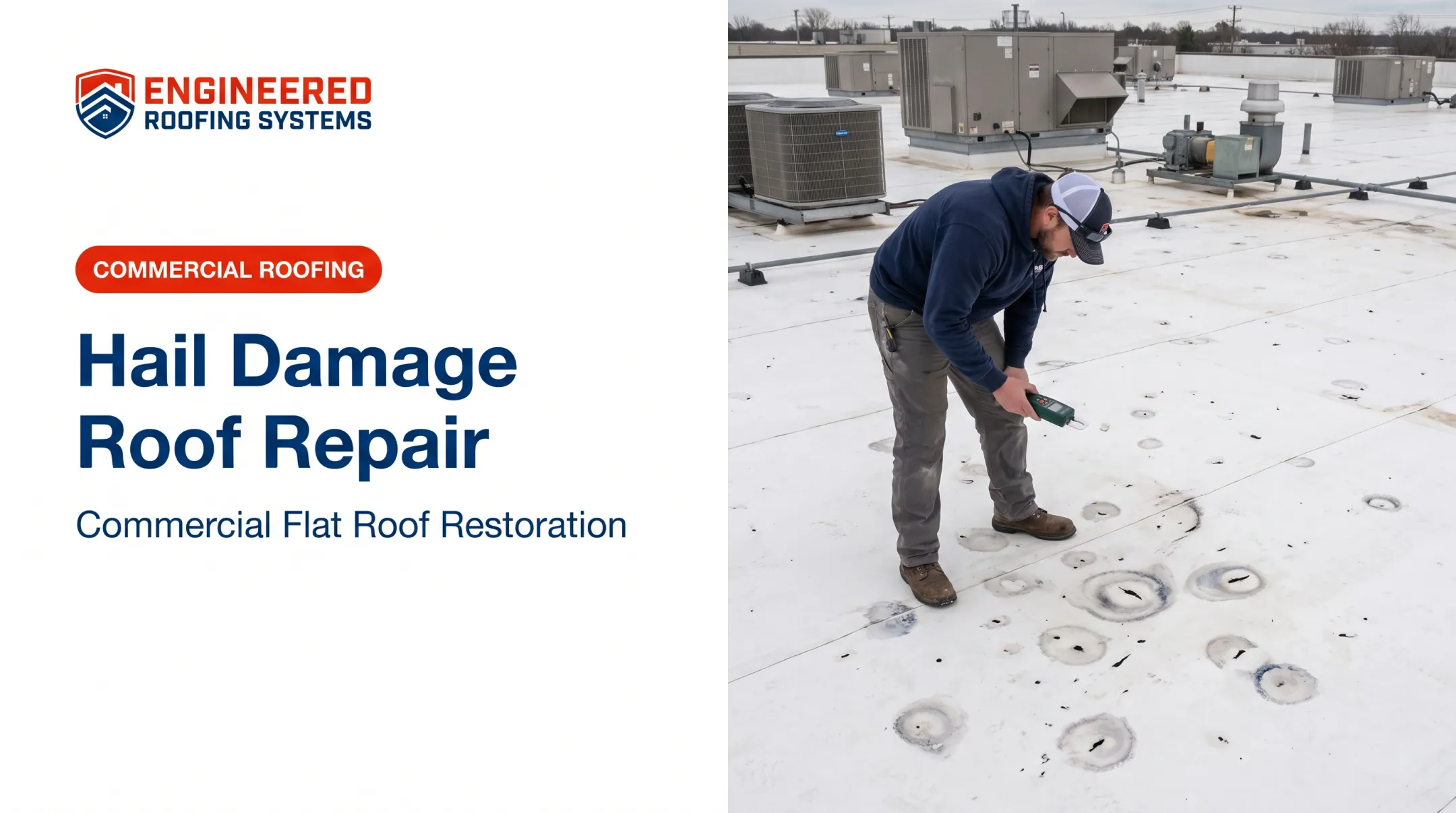
- Small impact craters or punctures in single-ply membranes (TPO, EPDM, PVC)
- Granule loss on modified bitumen or built-up roof (BUR) surfaces
- Denting on metal panels, HVAC equipment tops, and unit sides
Hail damage is frequently underestimated on commercial roofs because the punctures are small, often under one inch in diameter. Still, severe convective storms caused $208 billion in global insured losses over three years, with hail as the top claims driver. In 2025 alone, Texas recorded 902 major hail events, more than any other state.
Rain and Water Damage Indicators
Water damage signs include:
- Ponding water that remains 48+ hours after the storm
- Blisters or bubbles in membrane layers from trapped moisture
- Interior ceiling stains, dripping water, or bubbling paint
What most building owners miss: on flat roofs, water that penetrates the system travels laterally through insulation layers before appearing as an interior stain. The visible drip point is rarely where the breach occurred. This "travel effect" means a ceiling stain in the northwest corner could originate from a membrane failure 15 feet away.
Flashing and Drainage Damage Indicators
Flashing failures represent the most common storm entry points on commercial roofs:
- Damaged flashing around skylights, HVAC units, pipes, and drains
- Displaced perimeter edge metal where wind lifted the roof edge
- Clogged or damaged scuppers and internal drains that cause ponding
- Mold or musty odors inside the building — a late-stage indicator of water intrusion that started weeks earlier
When drainage systems fail, even minor membrane damage compounds quickly as standing water degrades the roofing materials.
How to Inspect Your Commercial Roof After a Storm — Step by Step
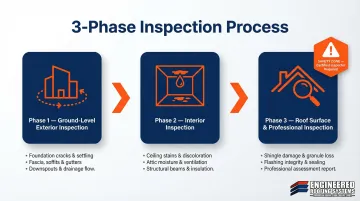
A proper post-storm inspection follows three phases: ground-level exterior, interior assessment, and roof surface. Each phase serves a different purpose, and all three should be completed before calling an inspection complete.
Safety note: Do not access the roof immediately after a severe storm. Wait until conditions are safe, and avoid walking on a potentially compromised surface. OSHA requires guardrails, safety nets, or personal fall arrest systems for rooftop work.
Phase 1 — Ground-Level Exterior Inspection
Walk the full building perimeter and check for:
- Roofing debris on the ground — membrane fragments, metal flashing pieces, or insulation chunks almost always mean something has come loose above
- Downspouts and scuppers for blockages
- Roof edges for hanging or bent edge metal, displaced coping, or visible membrane tears from ground level
Document everything with photos. Even if you can't see the roof surface, debris patterns tell you where to look once you access the roof.
Phase 2 — Interior Inspection
Check ceilings, walls, and upper floors for:
- Water stains or discoloration on ceiling tiles or drywall
- Dripping water or bubbling paint near walls and light fixtures
- Wet spots in mechanical rooms, storage areas, and around skylights
Photograph every interior anomaly. If accessible, inspect insulation in attic or plenum spaces — wet or compressed insulation indicates an active roof leak even when no interior drip is visible yet.
Phase 3 — Roof Surface and Professional Inspection
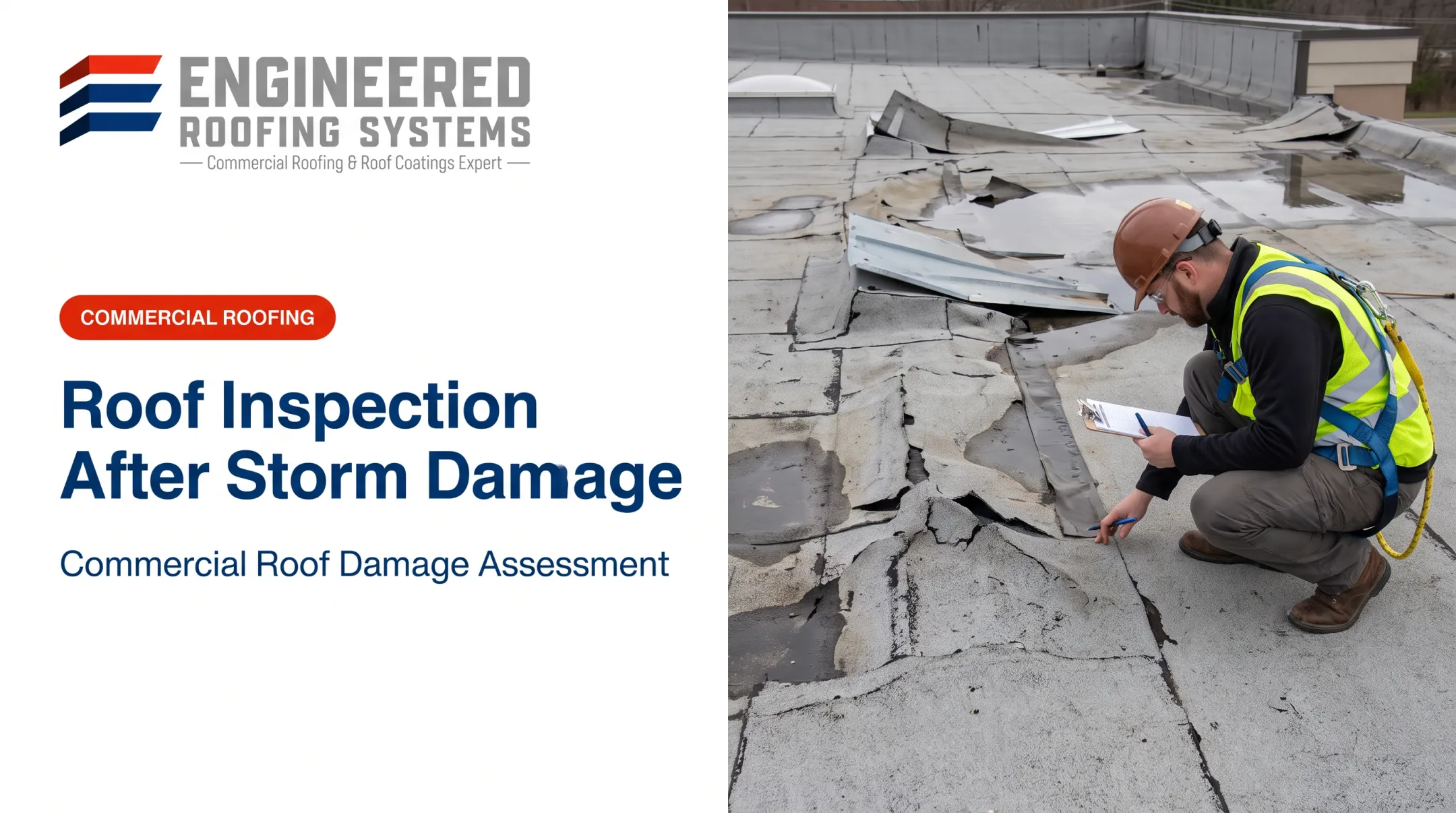
When safe to access, walk the roof surface and inspect:
- Membrane seams for separation or lifting
- Flashings at all penetrations for displacement or gaps
- Field membrane for punctures, blisters, or tears
- Drainage points for blockages or standing water
Note all locations with photos and GPS coordinates if possible.
A visual walk-through covers what you can see — but storm damage often hides in places it can't reach. Thermal imaging and electronic leak detection (ELD) tools locate hidden moisture that surface inspection misses entirely. ELD requires a conductive substrate directly beneath the membrane to function accurately. Only trained contractors carry this equipment and know how to interpret results.
Engineered Roofing Systems has worked across Southeast Texas since 2000, inspecting TPO, EPDM, modified bitumen, and metal roofing systems after hurricanes, hailstorms, and severe wind events. That regional track record matters — storm damage in coastal and Gulf-adjacent climates shows up differently than in drier climates, and knowing where to look first saves time and prevents missed damage.
How to Assess Storm Damage Severity
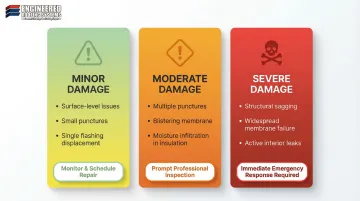
Not all storm damage requires the same response. Understanding severity helps property owners prioritize action, make accurate insurance reports, and choose between repair, restoration, and replacement without over- or underreacting.
Minor Damage (Surface-Level)
This category includes small membrane punctures (under 1 inch), localized granule loss, a single displaced flashing section, or minor debris accumulation with no signs of water penetration.
Schedule a professional repair within days, not weeks — even small punctures expand with the next rain event.
Moderate Damage (System-Level)
This category covers multiple membrane punctures or seam separations, blistering across several sections, ponding in more than one area, or flashing displacement at multiple penetrations with evidence of moisture reaching the insulation layer.
Get a professional inspection with moisture scanning before deciding on a repair path. Targeted repairs or partial restoration often resolve moderate damage without full replacement — coating and restoration systems can seal vulnerable areas and extend roof life significantly.
Severe Damage (Structural)
This category includes widespread membrane failure, structural sagging or deck deflection, saturated insulation across large sections, active interior leaks in multiple locations, or visible uplift of the roof system from its deck.
Engage a licensed commercial roofing contractor immediately for an emergency assessment — this level typically requires re-roofing or full replacement. Delayed repairs allow moisture to degrade insulation and corrode decking, turning a $6–$10 per square foot repair into an $8–$14 per square foot full replacement.
Engineered Roofing Systems handles all three tiers — from minor repairs and ASTEC coating restoration to full re-roofing — serving commercial and industrial properties across Southeast Texas.
Critical point: Severity classification depends on professional assessment, not visual inspection alone. Two roofs with similar-looking surface damage can have completely different subsurface conditions.
Documenting Storm Damage for Insurance Claims
Documentation quality directly affects insurance claim outcomes. Insurers require clear evidence linking specific storm events to specific damage. Without it, claims are frequently underpaid or disputed.
Understanding ACV vs. RCV:
- Actual Cash Value (ACV): Pays replacement cost minus depreciation
- Replacement Cost Value (RCV): Pays to fix or replace without depreciation
Most commercial policies pay roofs at ACV initially, then reimburse the depreciation after repairs are proven complete. Thorough documentation supports an RCV settlement.
What to document:
- Capture date-stamped photos and video of all damage — wide shots for context, close-ups for detail
- Photograph interior water damage, including ceiling stains and wall discoloration
- Document debris on both the ground and roof surface
- Record any HVAC or rooftop equipment damage separately
- Pull pre-storm condition photos from maintenance records to establish baseline
Filing timeline:
File the claim as soon as possible after the storm. In Texas, the Texas Department of Insurance requires insurers to acknowledge claims within 15 business days, and the Texas Windstorm Insurance Association sets a one-year reporting window for policyholders.
Most commercial policies include their own reporting timelines. Delays give insurers grounds to classify the situation as failure to mitigate — a common reason for claim denial.
Common Mistakes Commercial Property Owners Make After a Storm
Waiting Too Long for an Inspection
Minor membrane punctures or displaced flashing allow water into insulation for days or weeks before any interior sign appears. By the time a stain shows up on a ceiling, the subsurface damage is already extensive and expensive. Unaddressed moisture degrades insulation R-value and corrodes decking, often doubling project costs.
Assuming No Visible Damage Means No Damage
Flat commercial roofs are especially prone to hidden damage. Relying on a walk-around or looking from the ground without accessing the roof surface and using proper detection equipment leads to missed issues every time. A two-phase inspection — facilities crew first, then a certified professional roofer — catches what a ground-level check never will. That same standard applies when choosing who does the repairs.
Hiring Unvetted Contractors After a Storm
After major weather events, unqualified contractors appear quickly offering fast, cheap repairs. The risks include:
- Using incompatible materials that void manufacturer warranties
- Performing improper repairs that lead to recurring leaks
- Outright fraud — one contractor received a 5-year prison sentence for stealing $30,000+ from Hurricane Harvey victims
Before authorizing any work, verify contractor licensing, manufacturer certifications, and local references. Certifications like Versico Gold Medal Contractor or ASTEC Dealer of the Year status indicate the contractor is authorized to install materials that honor their warranties — something Engineered Roofing Systems holds across Versico, Carlisle, Duro-Last, and ASTEC product lines.
Frequently Asked Questions
Will insurance cover roof damage from a storm?
Most commercial property insurance policies cover sudden storm damage from wind, hail, and rain. Coverage depends on policy type (ACV vs. RCV), deductible structure, and whether the damage is clearly storm-related versus pre-existing neglect. Review your policy terms and file a claim promptly — most insurers require notice within 30–60 days.
How to prove storm damage to a roof?
Strong documentation typically includes:
- Date-stamped photos and video of all damaged areas
- A professional inspection report with written findings
- Weather event records (storm date, hail size, wind speed from NOAA)
- Pre-storm roof condition records, if available
Is it a good idea to have the entire roof fixed after a storm?
Full repair or replacement is only warranted when damage is widespread or structural. Localized damage typically calls for targeted repairs or restoration. A professional assessment is the only reliable way to determine the right scope of work.
Are roofing companies liable for damage?
A licensed roofing contractor is liable for workmanship defects and installation errors, but generally not for storm damage to a pre-existing roof. Review contractor liability terms and any manufacturer warranties before signing a repair agreement.
How soon after a storm should I inspect my commercial roof?
A ground-level and interior inspection should be done within 24 hours of a storm passing. A professional roof surface inspection should follow within 48–72 hours. Early documentation is critical for both damage control and insurance claims.
What storm damage signs are easiest to miss on a flat commercial roof?
The most commonly missed signs are subsurface moisture saturation, small hail punctures in single-ply membranes, and early-stage seam separation. None are visible from the ground — they require a rooftop inspection or professional moisture detection equipment.
Protect your investment before the next storm season arrives. Contact Engineered Roofing Systems at 281-404-2211 for a professional post-storm roof inspection. Serving Southeast Texas since 2000, they hold Versico Gold Medal and ASTEC Dealer of the Year recognition — and specialize in repairs and coating systems that extend roof life without pushing unnecessary replacements.