Key Takeaways
- Wind can lift membranes, separate flashing, and expose roof decks even without direct hurricane contact
- Before calling a contractor, secure the area, document all damage, and apply temporary protection
- Repair works for localized damage; replacement makes sense for widespread damage on aging systems
- Insurance covers most wind damage — but only if you document thoroughly and file promptly
- A qualified commercial roofing contractor accelerates repairs and supports a stronger insurance claim
How Wind Damages Commercial Roofs in Southeast Texas
Commercial flat and low-slope roofs—the most common type on warehouses, industrial facilities, and office buildings—are especially vulnerable to wind uplift. The difference in air pressure between the roof edge and the interior field creates a "peeling" effect that can dislodge membranes, coping, and edge metal.
Southeast Texas has absorbed some of the most destructive storms on record. From 1980–2024, Texas recorded 190 weather and climate disaster events with losses exceeding $1 billion each. Hurricane Ike in 2008 hit Galveston Island with 110 mph sustained winds, stripping membranes and edge metal from commercial roofs across the region. Hurricane Harvey in 2017 caused between $1–2 billion in insured wind and storm surge losses alone — much of it to low-slope commercial and industrial buildings.
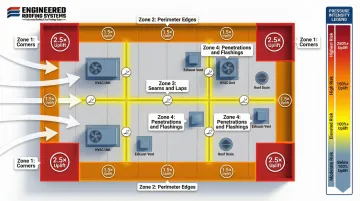
Even moderate wind speeds can cause serious damage when a commercial roof already has age-related wear, unaddressed damage, or compromised seams and sealants. Wind forces on corners can be more than 2.5 times the uplift experienced in the main interior of the roof, while perimeter edges experience more than 1.5 times the interior uplift pressure.
The areas most at risk during a wind event include:
- Roof corners — uplift forces exceed 2.5× the interior field pressure
- Perimeter edges — experience 1.5× interior uplift, where edge metal and coping are most likely to lift
- Seams and laps — older or poorly adhered membranes can peel back progressively
- Penetrations and flashings — wind-driven rain exploits any gap around HVAC curbs, drains, and vents
For commercial property owners in Houston, Conroe, Beaumont, and surrounding areas, that combination of aging roofs and frequent severe weather isn't theoretical — it's a recurring pattern that shows up on the repair schedule every storm season.
Signs of Wind Damage on a Commercial Roof
Commercial roof damage often cannot be fully assessed from the ground. What appears minor externally can represent significant structural exposure requiring immediate attention.
Membrane Damage (TPO, EPDM, Modified Bitumen)
Wind uplift causes roofing membranes to:
- Peel back at seams where adhesion fails
- Tear around penetrations like drains and vents
- Form blisters and bubbles where membrane separates from substrate
- Create immediate pathways for water infiltration
Flashing and Edge Metal Failure
Metal coping, edge termination strips, and flashing around HVAC units, drains, skylights, and curbs are frequent failure points. A study of 145 FM Global losses involving built-up roof systems found 59% of failures originated at the roof perimeter. Wind gets under unsecured metal and pries it away, leaving the roof perimeter exposed.
Structural and Deck Exposure
In severe cases, wind removes entire sections of roofing material, exposing the roof deck to rain and UV damage. Water that penetrates an exposed deck can rapidly damage:
- Insulation layers
- Interior ceilings
- Stored inventory
- Electrical and mechanical equipment
Interior Warning Signs
Inspect interior spaces for evidence of roof damage:
- Water staining on ceilings or walls near the roofline
- Dripping water or active leaks
- Damp or compressed insulation in attic spaces
- Mold odor indicating prolonged moisture presence
- Water damage around light fixtures
These interior signs are worth documenting with photos — they become important evidence when filing an insurance claim.
Debris Impact Damage
High winds across Southeast Texas carry branches, gravel, signage, and loose equipment that can puncture or compress roofing membranes on impact. Look for:
- Indentations or tears in the membrane surface
- Embedded material on the roof
- Gutters filled with granules from modified bitumen roofs
- Damaged HVAC equipment or rooftop units
What To Do After a Storm: Step-by-Step Action Plan
The sequence of actions after a storm matters as much as the actions themselves. Acting in the right order protects both the building and the insurance claim.
Step 1: Prioritize Safety Before Accessing the Roof
Do not access the roof immediately after a storm. Serious hazards include:
- Downed power lines
- Structurally weakened roof sections
- Slick, debris-covered surfaces
- Wind-loosened materials that could shift
Conduct all initial observation from the ground or through upper-floor windows.
Step 2: Conduct a Ground-Level Visual Inspection and Document Everything
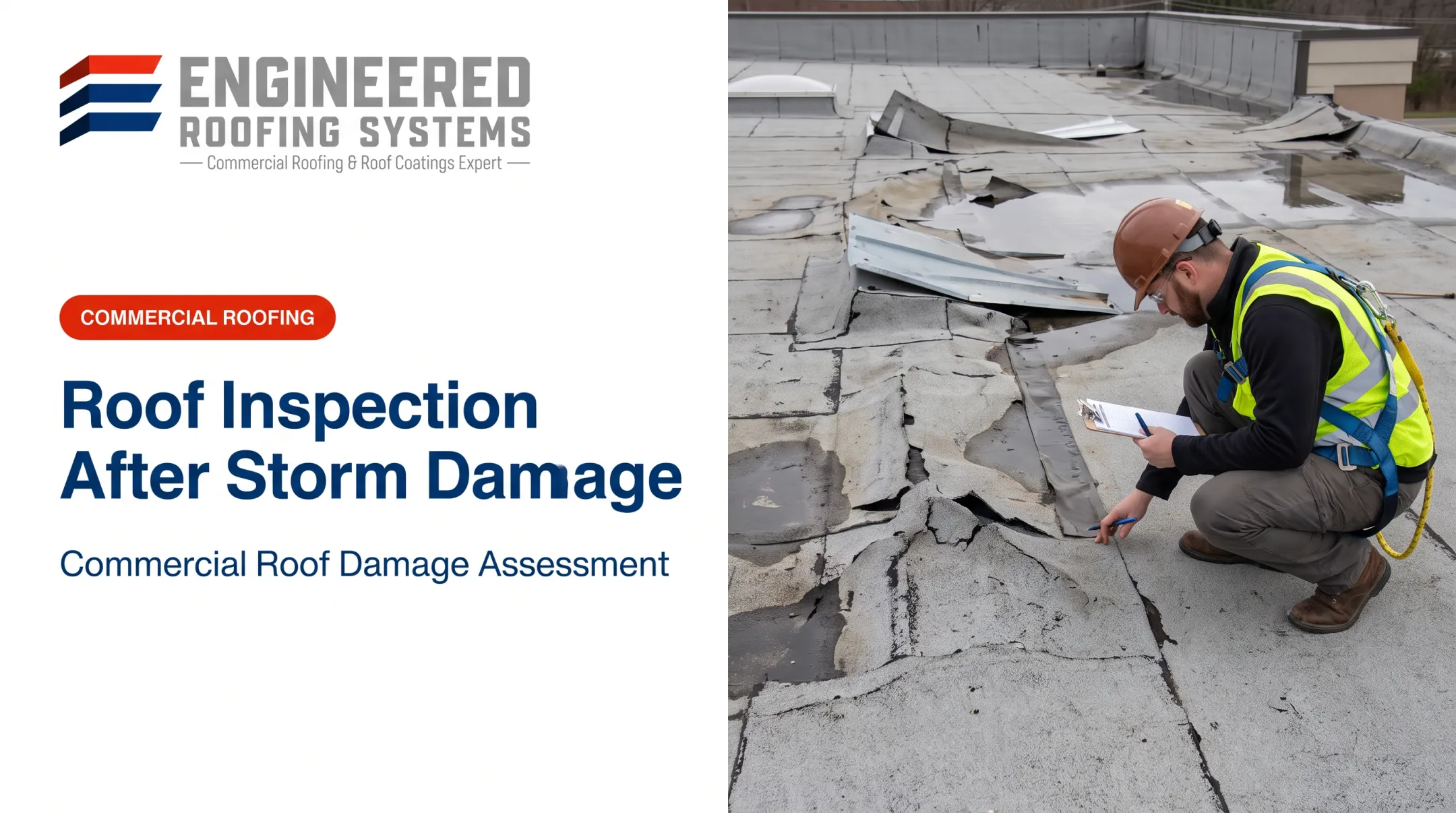
Walk the full perimeter of the building and photograph all visible damage from multiple angles:
- Missing or displaced membrane sections
- Bent or separated edge metal
- Debris accumulation on the roof
- Damaged HVAC or rooftop equipment
- Interior ceiling damage
Thorough photo and video documentation is the foundation of any successful insurance claim. Note the time and date of documentation relative to the storm event.
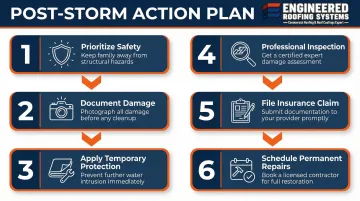
Step 3: Apply Temporary Protection to Prevent Further Damage
If active leaks are present or roofing sections are visibly exposed, a qualified contractor should apply temporary protective measures. Texas law protects a policyholder's right to make emergency temporary repairs to mitigate further damage, but permanent repairs made before adjuster inspection can void claims.
A qualified contractor should apply commercial-grade tarps or emergency sealant. Every day of delay allows water intrusion to spread into insulation, deck structure, and interior finishes — multiplying repair costs well beyond the original damage.
Step 4: Contact a Commercial Roofing Professional for a Full Inspection
A professional inspection is essential after any significant storm. A qualified commercial roofer can identify damage invisible from the ground, including:
- Membrane delamination
- Compromised seams
- Saturated insulation
Engineered Roofing Systems (ERS) provides storm damage inspections for commercial and industrial properties across Southeast Texas, with over 50 years of combined team experience on facilities ranging from warehouses to manufacturing plants.
Step 5: File Your Commercial Property Insurance Claim Promptly
Under Texas Insurance Code Chapter 542, insurance companies must acknowledge receipt of a claim within 15 business days. File your claim as soon as possible and:
- Submit all documentation collected in Step 2
- Include the contractor's professional assessment
- Communicate clearly with the adjuster
- Avoid signing releases or accepting settlements before confirming full damage scope
An experienced commercial roofing contractor can meet with your adjuster directly, helping ensure the full scope of damage is captured before any settlement is finalized — which makes scheduling permanent repairs the logical next step.
Step 6: Schedule Permanent Repairs Without Delay
Once temporary protection is in place, subsequent rain events, UV exposure, and thermal cycling will continue degrading the underlying structure. Each weather cycle widens seams, softens insulation, and accelerates deck deterioration. Timely, professional repairs also preserve manufacturer warranties on commercial roofing systems.
Repair vs. Replace: Making the Right Call After Wind Damage
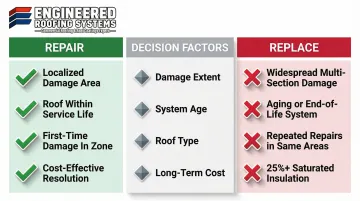
Four factors drive the repair-versus-replace decision for a commercial roof:
- Extent of damage — localized vs. widespread
- Age and remaining service life of the existing system
- Roofing system type and its repairability
- Long-term cost comparison between patching and full replacement
When Targeted Repairs Are the Right Move
If wind has affected a defined area—one section of membrane, a run of edge metal, flashing around a single penetration—and the rest of the roof is structurally sound and within its service life, targeted professional repairs are the most cost-effective solution. Quality commercial repairs, when done correctly, restore full performance and maintain the system's warranty.
When Replacement Makes More Financial Sense
When wind damage is found across multiple sections, when the same areas have been repaired repeatedly, or when the roof is approaching or past its design lifespan, full replacement is the financially smarter decision. Patchwork repairs on a compromised roof drive up costs and disrupt operations over time.
Hidden Damage and Saturated Insulation: A Critical Factor
Industry standards require total roof replacement if more than 25% of the roof area has wet or saturated insulation. Infrared roof scanning or moisture testing can reveal the true extent of saturated insulation and deck damage not visible to the eye.
If large portions of insulation are water-saturated, the cost and complexity of repair may approach replacement, making full replacement the smarter investment. ERS uses infrared scanning and core sampling to give commercial clients an accurate picture of what they're actually dealing with before committing to either path.
How to Prevent Future Wind Damage to Your Commercial Roof
Proactive maintenance is the single most effective way to reduce wind damage vulnerability. A roof in good condition—with sealed seams, secured flashing, intact membrane, and properly fastened edge metal—can significantly outperform a neglected roof even in the same storm.
Core prevention strategies include:
- Schedule professional inspections at least twice per year and after severe weather events
- Keep HVAC curbs, drains, and penetrations properly sealed and flashed
- Replace aging sealant and address seam lifting immediately
- Ensure rooftop drainage is clear so water does not pool and add weight stress
ERS offers long-term commercial roof maintenance programs designed to catch and correct weak points before they become storm vulnerabilities.
For properties in Southeast Texas and other high-wind regions, upgrading to wind-rated roofing systems or high-performance membranes from manufacturers like Versico, Carlisle, or Duro-Last provides a meaningfully higher baseline of protection. Many of these systems carry manufacturer warranties of up to 30 years, reducing long-term storm-season exposure and repair costs significantly.
Frequently Asked Questions
Does commercial property insurance cover wind damage to a roof?
Commercial property insurance typically covers wind damage, but coverage terms vary. Review your policy's storm damage provisions carefully — deductibles and coverage limits differ significantly between policies and insurers.
What is the most expensive part of replacing a roof?
For commercial roofs, the largest cost components are the roofing membrane and insulation materials, along with labor for tear-off and deck preparation. Structural damage to the roof deck, if present, can significantly increase total costs beyond standard replacement estimates.
Should I file a commercial insurance claim for storm damage to my roof?
If repair costs exceed your deductible, file the claim — and do it promptly. A roofing contractor who documents damage professionally strengthens your claim and improves the likelihood of full coverage.
Can hail damage to a roof be repaired?
Localized hail damage is typically repairable. Widespread granule loss on an aging roof or significant membrane punctures usually call for full replacement. A professional inspection will determine whether repair or replacement is the right call.
What should I avoid saying to an insurance adjuster about roof damage?
Don't speculate on damage causes, downplay problems, or accept a settlement before a full professional assessment. Have a commercial roofing contractor present during the adjuster's visit to ensure all damage is correctly identified and documented.