Introduction
After a major storm sweeps through Southeast Texas—whether it's hail the size of golf balls, straight-line winds topping 70 mph, or a hurricane like Harvey—commercial and industrial property owners face an immediate, high-stakes question: repair or replace?
Unlike residential roofs, where the decision affects a single family, commercial roofing choices ripple across your entire operation. A compromised roof threatens inventory, disrupts production schedules, jeopardizes lease agreements, and puts expensive equipment at risk.
The financial stakes are just as serious. A 20,000-square-foot facility can face six figures or more in roofing costs, making the right decision critical.
Many property managers assume the choice is binary: patch the damage or tear everything off and start over. But there's a third option that commercial property owners frequently overlook: roof coating systems. These can restore waterproofing, extend service life by 10 to 20 years, and cost a fraction of full replacement.
This guide walks you through damage assessment, the key decision factors that determine your best path forward, when coatings make financial sense, and how to maximize your insurance claim recovery.
TL;DR: Quick Decision Guide
- Repair when damage covers less than 25% of the surface, the roof is under 12 years old, and decking is intact
- Replace when damage exceeds 30%, the roof is 15+ years old, or structural decking is compromised
- Consider a coating system when the membrane is sound but aging and you want to skip a full tear-off
- Get a professional inspection first — hidden damage on flat commercial roofs is routinely missed from the ground
How to Spot Storm Damage on a Commercial Roof
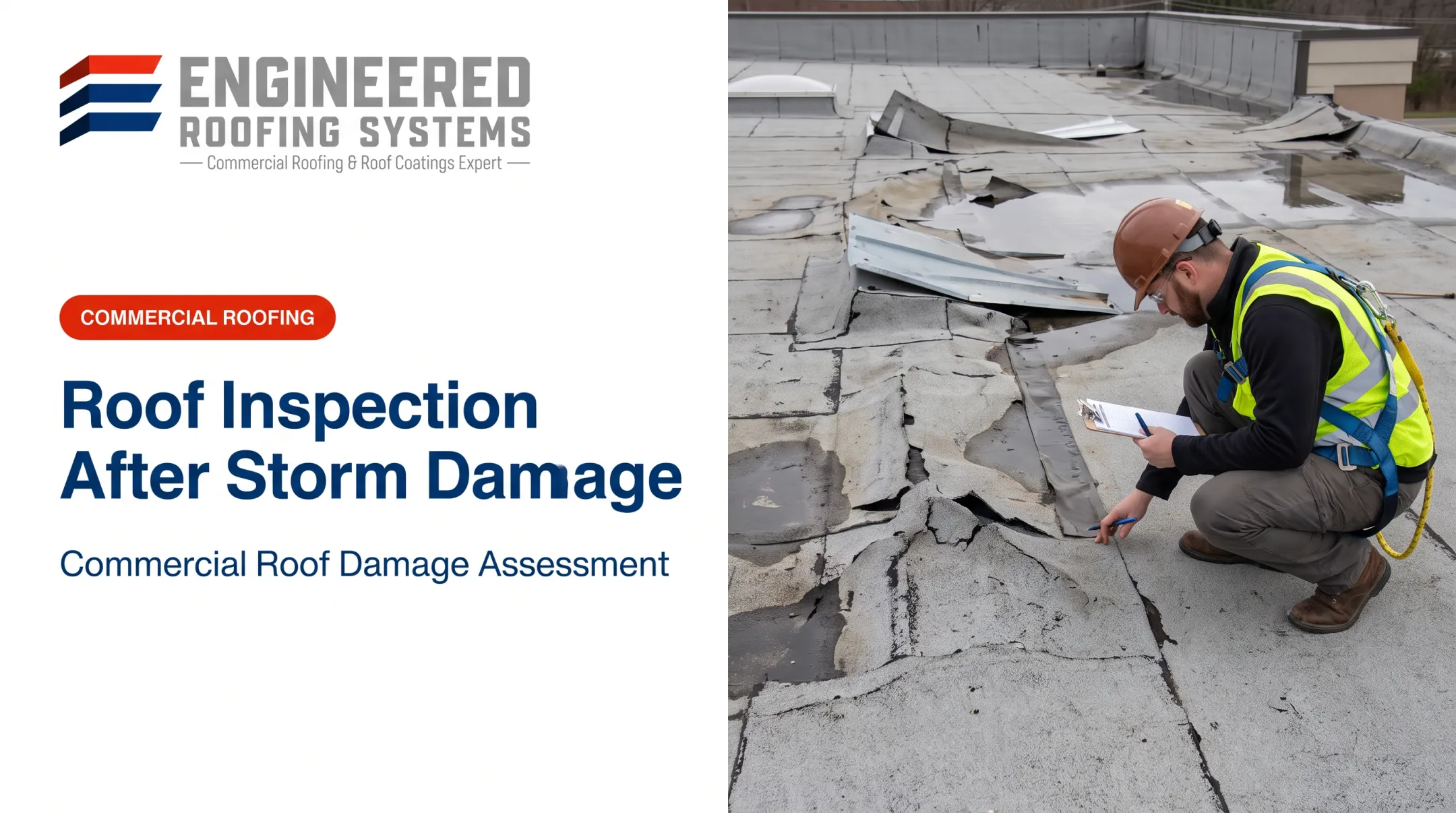
Commercial roofs—predominantly flat or low-slope systems using TPO, EPDM, modified bitumen, or metal—hide damage differently than residential pitched roofs. You won't see obvious missing shingles from the parking lot. Instead, ponding water, membrane punctures, and lifted seams often lurk beneath the surface, invisible until water stains appear on your warehouse ceiling.
Visible Signs to Check After a Storm
Walk the perimeter of your building and look for these common indicators:
- Blistering or bubbling membrane — trapped moisture pushing up from beneath the surface
- Punctures from hail or debris: round impact marks or tears in the membrane
- Lifted or separated seams where membrane sections no longer hold together
- Damaged flashing around HVAC units, vents, and roof penetrations (bent, torn, or pulled back)
- Granule loss or cracking on modified bitumen systems, exposing the underlying substrate
Interior warning signs that the roof has already been breached include:
- Water stains on ceilings or walls
- Rust on exposed metal decking
- Wet insulation in the attic or plenum space
- Musty odors indicating mold growth
Hidden Damage You Can't See From the Ground
Hail bruising on membrane systems and wind-driven water intrusion at seams often require infrared scanning or thermal imaging to detect. ASTM C1153 standards outline how nighttime infrared thermography locates wet insulation by detecting thermal capacitance differences—wet insulation absorbs more heat during the day and cools slower at night, making it visible to IR cameras after sunset.
Most commercial insurance policies require you to report damage "reasonably promptly"—typically within 24 to 72 hours. Delayed discovery can lead to denied claims, and additional weather events can compound damage quickly before you even know there's a problem. Engineered Roofing Systems includes infrared scanning in its post-storm inspection process, identifying hidden moisture that standard visual inspections miss—documentation that carries real weight when filing a claim.
The Key Factors That Determine Repair vs. Replace
No single factor is definitive—it's the combination that tells the full story. Here's the decision framework commercial property owners should use.
Factor 1: Extent of Damage
The industry-standard threshold is clear: if storm damage affects more than 25–30% of a commercial roof's surface area, replacement typically becomes more cost-effective than patchwork repair.
Why this threshold matters:
- Repair costs often approach or exceed replacement costs at this level
- Repaired and original sections wear at different rates, creating ongoing maintenance headaches
- Warranty coverage becomes fragmented—you'll have multiple warranties with different terms and expiration dates
- Many local building codes (adopting the International Existing Building Code) require that if more than 25% of a roof section is repaired in a 12-month period, the entire section must be brought up to current code
Factor 2: Roof Age and Material Condition
Commercial roofing lifespans vary significantly by material:
- TPO and PVC: 15–30 years
- EPDM: 25–40 years (the EPDM Roofing Association states properly maintained EPDM can last 38 years)
- Modified Bitumen: 10–30 years
- Standing Seam Metal: 40–70 years
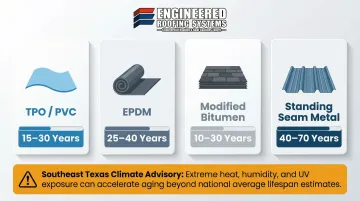
Southeast Texas conditions accelerate aging beyond national averages. UV intensity, high humidity, heat cycling, and hurricane exposure degrade membranes faster here than in milder climates. A 12-year-old TPO membrane in Houston may behave like a 16-year-old one in Denver.
Lawrence Berkeley National Laboratory research confirms that ultraviolet light and temperature-dependent degradation—both extreme in Southeast Texas—are the major factors in membrane aging. The daily swing from scorching afternoons to cooler nights accelerates this process further.
Factor 3: Structural and Deck Integrity
There's a critical difference between surface-level membrane damage and structural damage to the deck or insulation board beneath.
When decking is waterlogged, rotted, or structurally weakened, repair cannot solve the problem. Replacement becomes necessary regardless of how small the visible damage area appears. Wet insulation loses R-value permanently and creates conditions for mold growth and further deterioration.
Infrared scanning detects moisture trapped beneath the membrane before it causes catastrophic structural failure. If a moisture survey reveals moisture in 25% or more of the roof area, GAF recommends complete tear-off rather than coating or repair.
Factor 4: Prior Repair History
Each patch creates a new seam, and older commercial roofs with multiple prior repairs become increasingly difficult to waterproof reliably.
A roof with three or more prior repairs in the same area is almost always a replacement candidate after another storm event. The integrity of the original membrane has been compromised, and additional patches rarely hold up under Southeast Texas weather conditions.
Factor 5: Business Continuity and Timing
Unlike a homeowner who can tolerate a slower repair schedule, a warehouse, manufacturing plant, or office building may face:
- Production downtime costing thousands per hour
- Inventory damage from water intrusion
- Tenant obligations and potential lease violations
- Employee safety concerns
Timing relative to hurricane season matters. In Texas, hurricane season runs June through November. A patched roof going into peak storm months carries real operational risk. If you're evaluating repair versus replacement in April or May, consider whether a temporary fix will hold through the next six months of severe weather.
Engineered Roofing Systems works directly with clients like Powell Industries, Union Tank Car, and Inteplast to schedule roof work around active production schedules—keeping operations running while the work gets done.
When a Roof Coating Can Save You from a Full Replacement
Many commercial property owners don't know this option exists. A commercial roof coating system—applied directly over an existing roof membrane—stops leaks, seals seams, and restores waterproofing without a full tear-off. ASTEC elastomeric and silicone-based systems are among the most proven options for flat and low-slope commercial roofs.
Engineered Roofing Systems specializes in these solutions and is an ASTEC Dealer of the Year (multiple years), giving them deep expertise in identifying when coatings are viable.
When Coatings Are the Right Call
A coating system is a smart post-storm choice when:
- The membrane substrate is structurally intact (no major deck damage)
- Moisture intrusion is not yet widespread through the insulation layer
- The building owner wants to avoid business disruption from a full tear-off
- The existing roof has at least several years of substrate life remaining
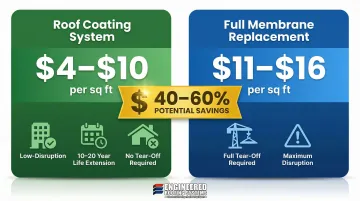
Cost comparison: Coating systems typically cost $4.00–$10.00 per square foot, compared to $11.00–$16.00 per square foot for full membrane tear-off and replacement. That's a potential savings of 40–60% while adding 10 to 20 years of service life.
What Coatings Can and Cannot Do
Coatings can:
- Seal active leaks and prevent new ones
- Stop rust on metal roofs
- Reflect UV radiation to reduce cooling costs
- Provide a renewable waterproofing layer
- Extend roof life by 10–20 years
Coatings cannot:
- Fix structural deck failure
- Replace badly degraded insulation
- Salvage a membrane that has lost cohesion across the majority of its surface
- Correct major ponding water issues (though silicone coatings perform better in ponding conditions than acrylics)
If your roof has widespread structural issues or moisture saturating more than 25% of the surface area, a coating won't fix it. At that point, full replacement is the right call.
The Energy Efficiency Bonus
Reflective coating systems reduce heat absorption, which lowers cooling costs for large commercial facilities in Southeast Texas.
A Florida Solar Energy Center field study on a commercial modified bitumen roof found that applying a white reflective acrylic coating delivered measurable results:
- 10% reduction in chiller electric power use
- 13,000 kWh in annual energy savings
- 35% lower summer weekday peak demand
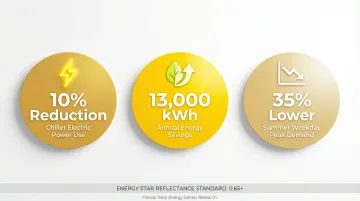
ENERGY STAR specifies an initial solar reflectance of 0.65 or higher for low-slope roofs. Southeast Texas falls entirely within IECC Climate Zones 2 and 3, where cool roofs deliver the greatest savings — reducing the heat buildup around buildings and cutting down on the expansion-and-contraction stress that shortens membrane life.
Navigating Insurance Claims for Commercial Storm Damage
Understanding your policy type is critical to making the right repair-or-replace decision.
| Policy Type | How It Works | Best Strategy |
|---|---|---|
| Replacement Cost Value (RCV) | Pays to repair or replace at current costs, no depreciation deducted | Replacement usually makes financial sense — insurer covers most of the cost |
| Actual Cash Value (ACV) | Pays replacement cost minus depreciation | Repair or coating is more realistic — depreciation can cut the material payout by 50% on a roof halfway through its useful life |
Knowing which policy you hold shapes everything about how you approach the adjuster conversation.
What Not to Say to a Roof Insurance Adjuster
Adjusters represent the insurer's financial interests, not yours. Avoid these common mistakes:
- Casual statements like "it looks minor" can be used against you — stay neutral and let the inspection speak
- Let the professional assessment determine cause; don't speculate on what happened
- Never agree to a scope of work until the full inspection is complete — hidden damage is common on commercial flat roofs
Have a qualified commercial roofing contractor present during the adjuster walkthrough. This ensures hidden damage gets documented accurately. A contractor like Engineered Roofing Systems can prepare detailed inspection reports with photographic evidence ready for direct submission to your insurer.
Documentation Best Practices
Strengthen your insurance claim by following these steps:
- Photograph all visible damage immediately after the storm (before any temporary repairs)
- Document interior water intrusion with photos and written notes
- **Keep records of prior repairs and maintenance** to establish the roof's pre-storm condition
- Obtain a written inspection report from a licensed contractor before filing your claim
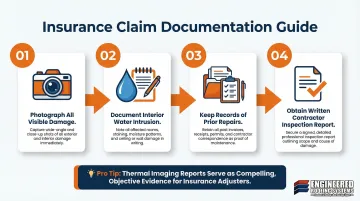
For commercial properties, thermal imaging reports are compelling evidence. Infrared scans document moisture intrusion objectively — producing evidence adjusters can't easily dispute.
Your Post-Storm Action Plan
Step 1: Ensure safety first. Keep personnel off the roof until a professional has assessed it. Address any immediate structural risks, and install tarps or emergency sealants to stop water intrusion while you arrange a full inspection.
Step 2: Get a professional inspection before making any decisions. Storm-chaser contractors flood affected areas after major storms, using high-pressure tactics and demanding full upfront payment. Knowing what to look for in a legitimate contractor protects you from both.
What to look for in a legitimate contractor:
- Established local presence (not a P.O. box or out-of-state address)
- Verifiable references from commercial clients
- Manufacturer certifications (Versico, Carlisle, Duro-Last, ASTEC)
- Voluntary licensing from the Roofing Contractors Association of Texas (RCAT)
Texas has zero state-mandated licensing for roofing contractors. Anyone can legally operate as a roofer without state registration. RCAT voluntary commercial licenses require two continuous years of Texas experience, $500,000 in general liability insurance, and passing business/safety and commercial roofing exams.
Beware of illegal deductible waivers: Texas law (HB 2102, effective September 2019) makes it illegal for contractors to waive, absorb, or promise a rebate for an insurance deductible. Any contractor offering this is breaking the law.
Step 3: Get estimates in writing — for both repair and replacement (or coating) — before contacting your insurer. A detailed scope of work from a trusted contractor strengthens your claim and gives you a clear cost basis for the decision ahead.
Frequently Asked Questions
Is it better to repair or replace a storm-damaged roof?
It depends on damage extent, roof age, and insurance coverage. Repair works for isolated, minor damage on roofs under 12 years old. Replacement is better when damage exceeds 30% of the surface or the roof is nearing the end of its service life. A coating system may be a cost-effective third option for commercial buildings with structurally sound membranes.
What not to say to a roof insurance adjuster?
Avoid minimizing damage, guessing at causes, or agreeing to any scope before a full professional inspection. Have a licensed roofing contractor present during the adjuster walkthrough to ensure all damage—including hidden moisture detected by infrared scanning—is captured in the claim.
What percentage of storm damage requires a full commercial roof replacement?
When storm damage affects more than 30% of a commercial roof's surface area, replacement typically becomes more cost-effective than repair. Fragmented warranties, inconsistent wear rates, and building code requirements all tip the math toward a full replacement at that threshold.
How does roof age affect the repair vs. replace decision?
Commercial membranes under 10 years old in good condition are strong repair candidates. Roofs over 15 years old in high-UV, high-humidity climates like Southeast Texas often make more financial sense to replace or coat, since accumulated wear compounds with storm damage.
Can a roof coating be used after storm damage instead of a full replacement?
Yes, if the underlying deck and insulation are structurally sound. An elastomeric or silicone coating can seal storm-related damage, restore waterproofing, and extend roof life at a fraction of replacement cost. It's a practical option for commercial properties that need to keep operations running.
How soon after storm damage should I get a professional roof inspection?
Within 24–72 hours where possible, before additional weather events worsen the damage and before filing an insurance claim. Prompt inspection also satisfies most commercial insurance policy requirements to report damage "reasonably promptly" and preserves your claim rights.