What are the different types of flat roof repair?
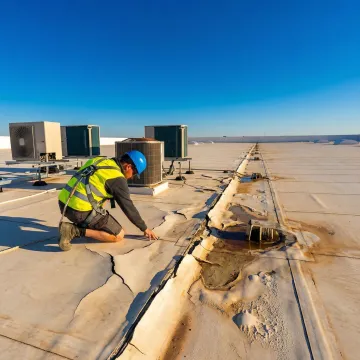
Flat roof repairs vary by damage type and roofing system. Common repairs include membrane patching for punctures or tears, seam reinforcement using heat welding or adhesive, flashing replacement at roof edges and penetrations, drainage system clearing and realignment, coating application for surface restoration, and metal panel replacement for standing seam systems. Industrial facilities often require membrane repairs from equipment damage, seam failures from thermal cycling, and flashing issues at HVAC curbs. Our technicians assess your specific system—whether TPO, PVC, EPDM, or metal—and recommend the most effective repair method to restore protection while maintaining manufacturer warranty compliance.
How quickly can you respond to industrial roof leaks?
We prioritize emergency industrial roof repairs because we understand production downtime costs. Our team typically responds to urgent leak calls within 24 hours, often same-day for critical facilities. We first implement temporary containment measures to stop water intrusion and protect equipment, then schedule permanent repairs at your convenience to minimize operational disruption. For Houston-area industrial clients, our proximity in Conroe allows rapid response throughout Montgomery County, Harris County, and surrounding areas within our 100-mile service radius. We maintain relationships with our industrial clients through preventative maintenance programs that often catch issues before they become emergencies.
How long do industrial flat roof repairs typically last?
Properly executed flat roof repairs using quality materials should last 10-20 years when combined with regular maintenance. Repair longevity depends on several factors: the repair method used, quality of materials, existing roof condition, and environmental stresses. We use manufacturer-certified repair systems from Versico, Carlisle, Duro-Last, and ASTEC that often carry warranties. Houston's intense UV exposure, humidity, and thermal cycling require industrial-grade materials and proper installation techniques. Repairs integrated into a preventative maintenance program typically outlast isolated fixes because we monitor the entire roof system and address developing issues before they compromise earlier repairs. Our long-term industrial clients see maximum value from this proactive approach.
What causes flat roofs to fail on industrial buildings?
Industrial flat roofs face unique failure modes beyond typical commercial structures. Common causes include membrane punctures from rooftop equipment installation or maintenance activities, seam failures from thermal expansion and contraction cycles, ponding water from inadequate drainage or structural settling, flashing deterioration at penetrations and roof edges from UV exposure and weathering, fastener back-out on mechanically attached systems from vibration, and storm damage from hail or wind-driven debris. Houston's climate accelerates deterioration through intense UV radiation, high humidity, and temperature extremes. Manufacturing facilities with heat-generating equipment experience additional thermal stress. Regular inspections identify these issues early, allowing targeted repairs that prevent system-wide failures requiring complete replacement.
Do you work on occupied industrial facilities?
Yes, we specialize in repairing roofs on active industrial facilities while minimizing disruption to your operations. Our team coordinates with facility managers to schedule work during low-production periods, implements safety protocols including fall protection and confined space procedures, establishes clear work zones to isolate repair areas from operational spaces, and maintains open communication throughout the project. We've successfully completed repairs on manufacturing plants, warehouses, and production facilities where continuous operation is essential. Our experience with clients like Powell Industries and Union Tank Car has refined our ability to work safely and efficiently in complex industrial environments while respecting your operational requirements and maintaining OSHA compliance.
Can roof repairs be done during Houston's hot summer months?
Yes, we perform industrial roof repairs year-round, including Houston's intense summer heat. Many roofing materials actually require warm temperatures for proper installation—adhesives cure faster, membranes are more flexible, and coatings flow better. However, extreme heat requires modified work schedules and safety protocols. We often start work early morning to take advantage of cooler temperatures for physically demanding tasks, use heat-resistant materials designed for Texas conditions, implement additional safety measures including hydration breaks and heat stress monitoring, and adjust installation techniques to account for rapid material curing times. Our decades of Southeast Texas experience means we understand how to deliver quality repairs regardless of weather conditions while keeping our team safe.
What does a typical industrial roof inspection include?
Our comprehensive industrial roof inspections thoroughly evaluate your entire roofing system to identify current issues and predict future maintenance needs. We examine membrane condition for punctures, tears, and UV degradation, inspect all seams for separation or weakening, assess flashing integrity at penetrations, edges, and transitions, evaluate drainage systems for proper function and debris accumulation, check fastener and attachment security, document ponding water areas, photograph problem areas for your records, and test moisture levels using infrared scanning when warranted. For industrial facilities, we also note equipment placement impacts, access requirements for future maintenance, and structural loading concerns. You receive a detailed written report with prioritized recommendations and cost estimates, helping you budget for necessary repairs before small problems escalate.
How much do industrial flat roof repairs typically cost?
Industrial roof repair costs vary significantly based on damage extent, roof system type, accessibility, and building size. Small isolated repairs like patching a membrane puncture may cost a few hundred dollars, while extensive seam restoration or large section replacement can reach several thousand. Factors affecting price include repair square footage, material type (TPO, PVC, EPDM, metal), access equipment requirements (lifts, scaffolding), urgency (emergency vs. scheduled), and coordination complexity with active operations. We provide transparent, detailed estimates after inspecting your roof and understanding your facility's specific needs. Our goal is helping you make cost-effective decisions—sometimes a targeted repair extends roof life adequately, while other situations warrant considering coating systems or replacement for better long-term value.