What qualifies as emergency storm damage roof repair for a commercial building?
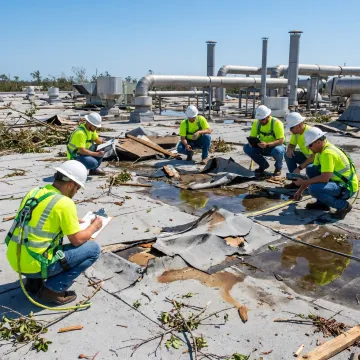
Emergency storm damage roof repair applies when wind, hail, heavy rain, debris, or lightning creates active leaks or exposes the building to immediate water intrusion. Common issues include punctures, lifted seams, flashing failures, damaged panels, and membrane separation. The priority is to stabilize the roof quickly, protect interior assets, document damage, and move toward permanent repairs before conditions worsen.
How quickly can a commercial roofing contractor respond after a storm?
Response time depends on storm severity, site conditions, and regional demand, but emergency commercial contractors typically prioritize active leaks and occupied facilities first. Engineered Roofing Systems offers rapid response after storm events to assess damage, apply temporary protection, and reduce additional loss. Early action is important because even small openings can lead to insulation saturation, interior damage, and operational disruption.
What happens during an emergency commercial roof inspection?
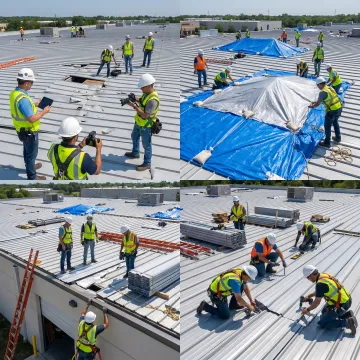
An emergency inspection focuses on identifying immediate failure points and documenting the full extent of storm damage. The contractor checks membranes, seams, flashing, penetrations, drains, edge details, metal panels, and visible structural concerns. Photos and written findings help building owners understand what needs urgent stabilization, what can be permanently repaired, and whether restoration or replacement should be considered.
Can temporary repairs stop a roof leak until permanent work is scheduled?
Yes. Temporary repairs are often the first step after storm damage because they help control active leaks and reduce further interior damage. These measures may include sealing exposed areas, securing vulnerable sections, or applying short-term weatherproofing. Temporary work is not a substitute for full repair, but it buys valuable time while materials, approvals, and weather conditions align for permanent restoration.
Will storm damage repairs help with an insurance claim?
Yes. Proper storm damage documentation can support the insurance process by showing the condition of the roof, the type of damage present, and the urgency of repairs. Contractors often provide photos, inspection findings, and repair scopes that help property owners communicate clearly with carriers. Good documentation is especially useful when distinguishing storm-related damage from older wear or maintenance issues.
How do you know if a storm-damaged roof should be repaired or replaced?
The decision depends on the extent of damage, the roof's age, moisture intrusion, system condition, and whether repairs will provide reliable long-term performance. Localized punctures, flashing failures, or seam damage may be repairable. Widespread uplift, saturated insulation, repeated leak history, or severe system deterioration may justify replacement or reroofing. A thorough inspection provides the basis for that recommendation.
What types of commercial roofs can be repaired after storm damage?
Most commercial roof types can be repaired if the damage is addressed promptly and the underlying system remains serviceable. That includes TPO, PVC, metal roofing, coatings, and other flat or low-slope systems. Repair methods vary by material and failure type, but the goal is always the same: stop water intrusion, restore weather resistance, and extend the useful life of the roof where practical.
Do emergency commercial roof repairs come with warranties?
Warranty coverage depends on the repair scope, roof condition, and materials used. Permanent repairs completed with approved methods and manufacturer-backed systems may qualify for stronger warranty protection than temporary emergency measures. If storm damage is too extensive for a dependable repair, reroofing or replacement may offer the best path to long-term warranty coverage and predictable performance.