
Many facility managers struggle with a roof that seems fine until it isn't. A slow leak turns into water damage. A skipped inspection turns into a $200,000 replacement bill. Energy costs creep upward for months before anyone connects it to the roof overhead.
This guide breaks down the roofing systems available, what they cost, how to spot trouble early, and how to pick a contractor who won't leave you exposed.
Key Takeaways
- Match the system—TPO, EPDM, metal, or modified bitumen—to your building type, climate, and budget
- Coatings and maintenance programs can add years of service life without a full tear-off
- Budget around material choice, roof size, and existing condition—the biggest cost drivers
- Manufacturer-certified contractors protect warranties and cut long-term risk
What Is Considered Commercial Roofing?
Commercial roofing covers systems built for businesses, warehouses, and multi-tenant properties, not single-family homes. These roofs are almost always low-slope, meaning a slope of 3:12 or less by National Roofing Contractors Association (NRCA) standards. Anything steeper falls into the high-slope category more common on residential structures. The differences run deeper than slope, though. Commercial roofs typically involve:
- Larger square footage spanning tens of thousands of square feet
- Heavier rooftop equipment loads, including HVAC units and drainage systems
- Stricter code requirements under IBC Chapter 15 and IECC Chapter 4, covering drainage, wind-uplift resistance, and insulation R-values
- Regular foot traffic from maintenance crews and contractors
Commercial Property Types
Commercial roofing applies to warehouses, manufacturing plants, retail centers, offices, and specialized facilities like railcar repair shops. Engineered Roofing Systems has worked across that spectrum—coating and sheet-metal replacement at railcar facilities in Sheldon and Cleveland, Texas, reroofing at the Navasota Fire Station, and repairs for manufacturers such as Sniper Drilling Motors and Pelican Packaging. Scope also includes new construction, full re-roofs, targeted repairs, and ongoing maintenance. Most commercial roofs need that full continuum of care over decades, not a single install-and-forget job.
Types of Commercial Roofing Systems
Not every commercial building needs the same roof. Climate, chemical exposure, budget, and roof condition all shape the right system.
Single-Ply Membranes: TPO, EPDM, PVC
Single-ply membranes are common on flat and low-slope commercial roofs. The three main options differ in climate fit, longevity, and chemical resistance:
- TPO: Lightweight, heat-welded, and highly reflective—a strong fit for hot southern climates like Texas, per Versico's product specifications
- EPDM: A rubber membrane used for over 40 years; average service life can reach 38 years when properly installed and maintained, according to the EPDM Roofing Association
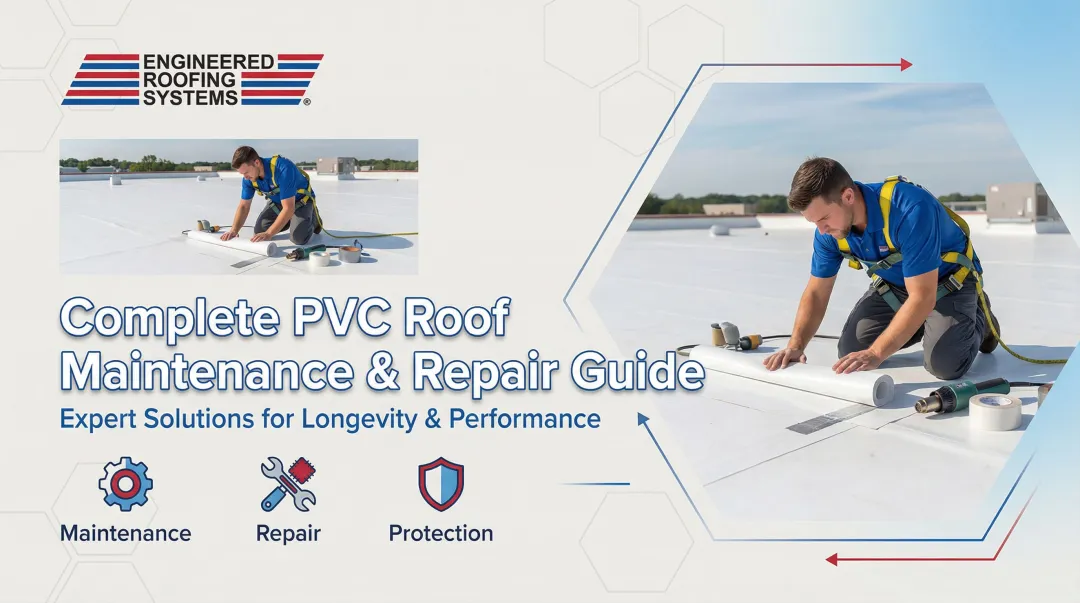
- PVC: Strong chemical resistance and heat-welded seams, useful for facilities with industrial exposure

Metal Roofing Systems
Standing seam and R-panel systems dominate industrial buildings for good reason:
- Standing seam: Concealed fasteners; field service up to 35 years in metal industry studies, with sealants projected as long as 60 years under proper conditions
- R-panel: Exposed fasteners; lower cost and a practical fit for warehouses and agricultural buildings
Modified Bitumen and Built-Up Roofing (BUR)
These are the traditional multi-layer systems. BUR alternates layers of asphalt and fiberglass felts for a thick, durable membrane. Modified bitumen typically layers a base sheet and cap sheet, sometimes with additional plies between. Both add weight and layers in exchange for heavy-duty, long-standing protection.

Roof Coatings as a Restoration Option
Silicone and acrylic coatings don't replace a roof. They restore one. Each coating type solves a different problem:
- Silicone: Protects against UV, ponding water, and weather
- Acrylic: Forms a waterproof, reflective layer that helps cut cooling costs
Choosing among these systems is easier with manufacturer-backed materials and clear warranty paths. Engineered Roofing Systems is an authorized contractor for Versico, Carlisle, Duro-Last, and ASTEC, with warranties reaching up to 30 years on qualifying systems.
How Much Does a Commercial Roof Cost Per Square Foot?
Pricing depends on several moving parts:
- Material choice (TPO, EPDM, metal, or coatings) sets the base price point
- Roof size and slope raise install cost on larger or more complex decks
- Current condition adds tear-off, structural repairs, and drainage upgrades
- Site access costs more when production equipment limits safe staging
Coatings and repairs generally run far cheaper than full replacement, since they avoid tear-off labor and material costs entirely. Published national per-square-foot averages still vary too widely by region and supplier to use as a reliable benchmark.
A 2024 industry survey by Roofing Contractor found that 42% of contractors cited rising material costs as a top concern, and 39% flagged lowball bidding as a pricing risk in the current market. Square-footage estimates alone miss structural issues, drainage problems, and code requirements that can swing final cost significantly.

The smartest move: get an on-site inspection. Engineered Roofing Systems offers free commercial roof inspections so you can price the job against actual conditions, not a national average.
Signs Your Commercial Roof Needs Repair or Replacement
Catching problems early saves money. Watch for these warning signs:
- Ponding water that sits for more than 48 hours after rain
- Visible leaks or water stains on interior ceilings
- Rust spots on metal panels, especially near seams and fasteners
- Blistering or cracking on membrane surfaces
- Interior finish damage such as cracked paint, discolored drywall, or peeling wallpaper
Rising energy bills can also point to a roof problem. Degraded insulation or a failing membrane lets conditioned air escape, forcing HVAC systems to work harder.
Post-storm inspections matter too. After major weather events, check perimeter attachments, flashings, and rooftop equipment first. These areas are most likely to hide damage.
The Benefits of Roof Coatings and Preventive Maintenance
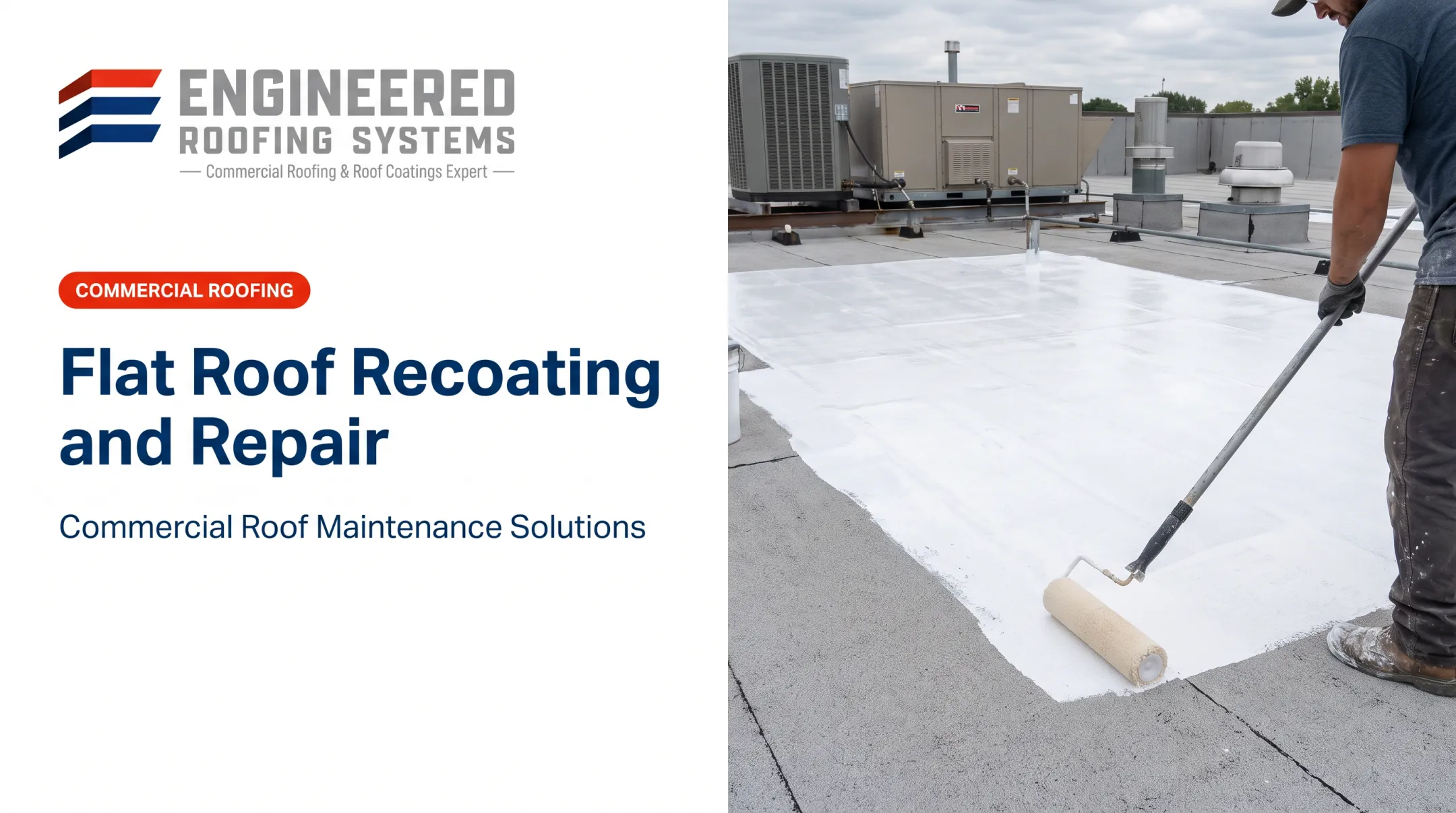
Roof coatings give commercial and industrial buildings a practical way to extend roof life without a full replacement.
What coatings do:
- Repair minor leaks and seal cracks
- Stop rust from spreading on metal panels
- Reduce heat absorption, lowering cooling costs during Texas summers
Those gains last longer when coatings sit inside a preventive maintenance plan. Versico research found that regularly maintained roofs lasted an average of 8 years longer than roofs under reactive maintenance, while costing $0.11 per square foot less over the roof's lifecycle.

Real Projects, Real Results
At the Navasota Fire Station, ERS completed roof repairs and installed a full industrial coating system rather than a full replacement. The coating created a seamless, waterproof barrier that reduced heat absorption and protected against UV exposure.
At Sniper Drilling Motors in Houston, ERS repaired existing damage and applied a coating system that reinforced weak areas and extended the roof's service life without shutting down operations.
For active industrial sites, minimizing disruption is often the deciding factor. Fluid-applied systems like ASTEC Re-Ply install directly over an existing roof, avoiding tear-off entirely and letting production continue with minimal interruption.
Choosing the Right Commercial Roofing Contractor
Not every roofing contractor is equipped to handle industrial complexity. A few things matter more than a low bid.
Look for:
- Manufacturer certification — warranties often require it. Versico, for example, reserves top-tier coverage for certified contractors only.
- Documented industrial experience — coordinating repairs around active production schedules takes real logistical skill.
- Long-term relationships — a contractor who has serviced the same clients for years has proven reliability.
Engineered Roofing Systems meets those standards. Founded in 2000 as Energy Coating Systems, it is now a full-service industrial roofing contractor with over 50 years of combined team experience.
Long-standing client relationships show the pattern:
| Client | Relationship Since | Scope of Work |
|---|---|---|
| Powell Industries | 2003 | Metal repairs, coatings, membrane installation |
| Union Tank Car | 2012 | Standing-seam repairs, coatings, budget planning |
| Comcast | 2012 | 33 facilities, inspections, full reroofing |

The company has also earned Versico Gold Medal Contractor status for three consecutive years and ASTEC Dealer of the Year honors.
Frequently Asked Questions
How much does a commercial roof cost per square foot?
Cost depends heavily on the material chosen, roof size, and the condition of the existing structure. Repairs and coatings cost significantly less than full replacement, but an on-site inspection gives the most accurate number.
What is considered commercial roofing?
Commercial roofing refers to systems built for businesses, warehouses, and multi-tenant properties rather than homes. It typically involves low-slope designs, heavier equipment loads, and stricter building codes.
How long does a commercial roof last?
Lifespans vary by material: TPO and PVC often run 20-30 years, EPDM can reach 38 years with proper maintenance, and metal roofs can exceed 40-60 years. Regular maintenance extends all of these.
Can a commercial roof be repaired instead of replaced?
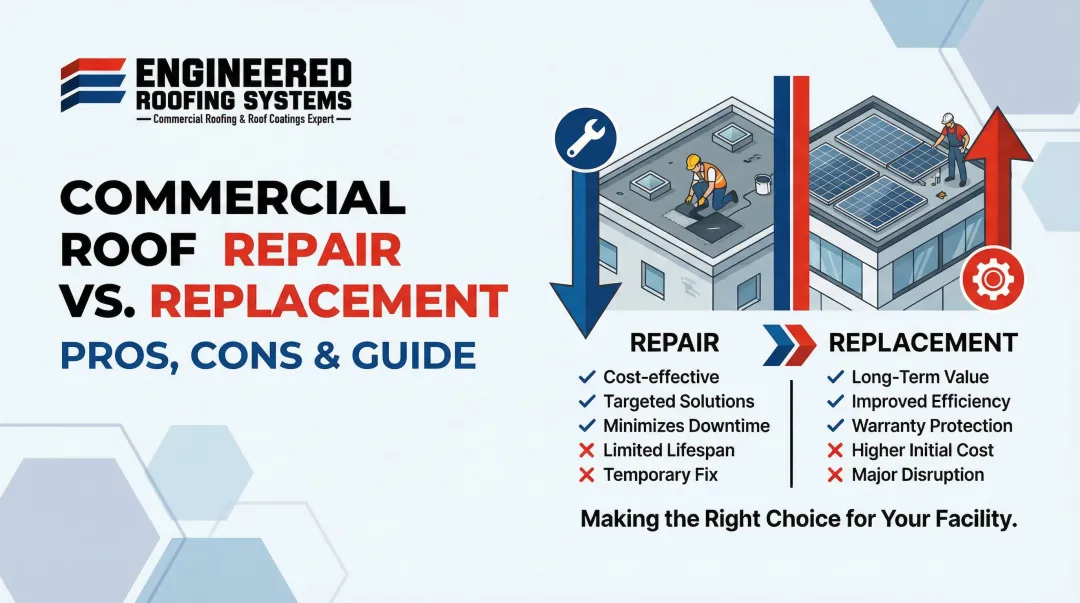
Yes, in many cases. Coatings and targeted repairs work well when the underlying structure is sound and damage is localized. Full replacement becomes necessary when the membrane or deck has failed beyond repair.
How often should a commercial roof be inspected?
Industry guidance recommends inspections at least twice a year, ideally in spring and fall, plus additional checks after any major storm.
Do commercial roofs come with warranties?
Yes. Manufacturer warranties through certified contractors can reach up to 30 years on qualifying systems, often including No-Dollar-Limit coverage for long-term protection.