
Picking the wrong material isn't just an inconvenience. It leads to leaks, higher energy bills, and roofs that need replacing years before their time. This guide breaks down the main types of flat roof materials, how they differ, and how to choose the right one for your facility.
TL;DR
- Main options: single-ply membranes (TPO, EPDM, PVC), built-up roofing, modified bitumen, and fluid-applied coatings
- Expect clear tradeoffs in cost, lifespan, and energy performance by material
- TPO/PVC: reflective, welded seams · EPDM: durable, lower cost · BUR/mod-bit: multi-layer protection
- Choose based on budget, climate, roof traffic, and building type
- Manufacturer warranties plus certified installation protect long-term performance
What Are Flat Roof Materials?
Flat roof materials are the membranes, coatings, and built-up systems that waterproof low-slope commercial and industrial roofs. Most flat roofs aren't perfectly flat. They carry a slight pitch—often about a quarter-inch per foot—to help water drain.
These materials handle ponding water, constant UV exposure, and foot traffic in ways that sloped shingles never have to. That's why material selection is a practical decision tied directly to how a building operates, not a cosmetic one.
A warehouse with rooftop HVAC traffic needs something different than a chemical plant dealing with grease and exhaust. The sections below break down the main material types so you can match performance, durability, and cost to how your building actually runs.
Why Flat Roof Material Choice Matters for Commercial and Industrial Buildings
The material you choose directly affects leak resistance, energy costs, and how long you go before reroofing.
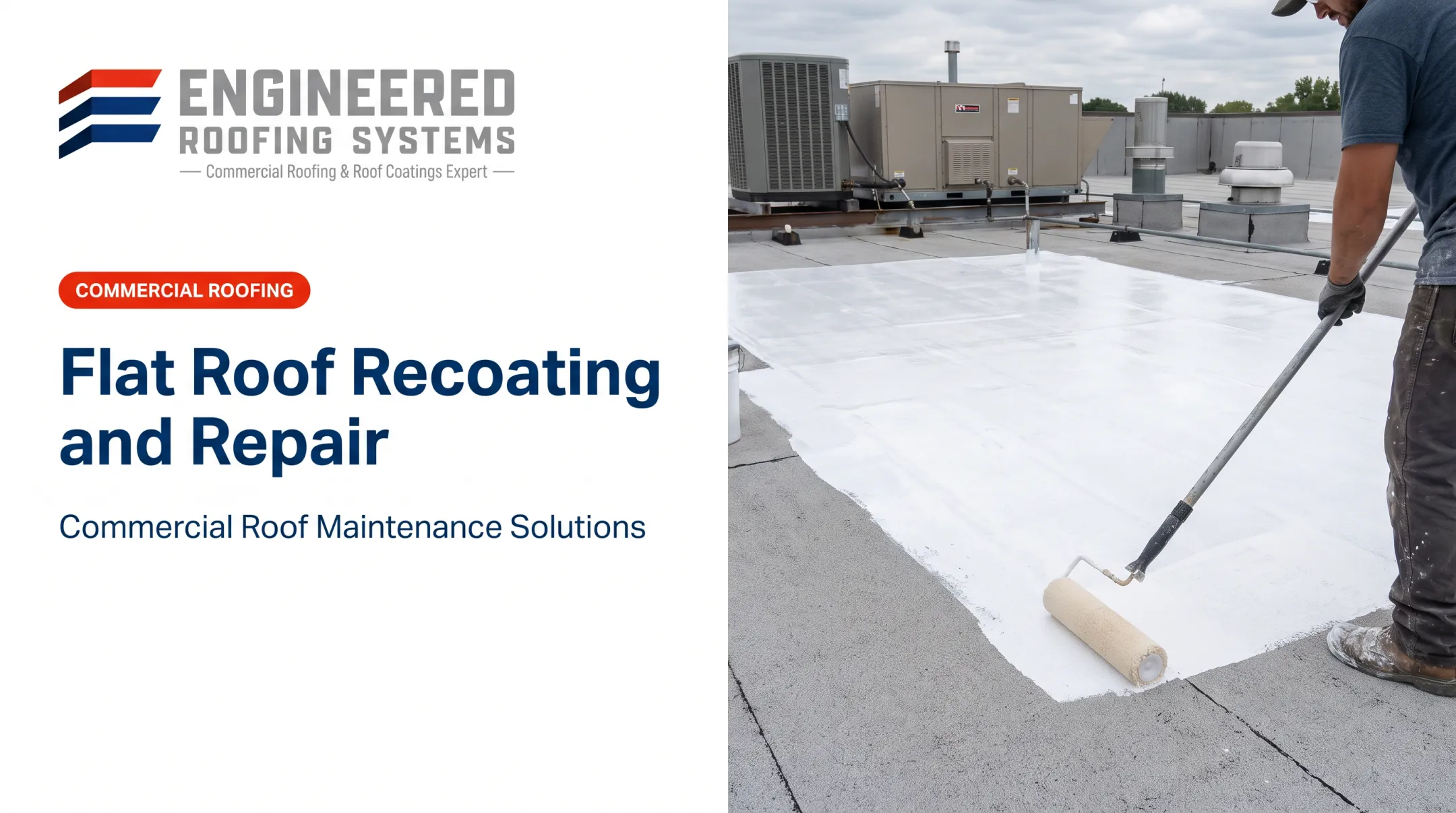
Reflective materials like TPO can lower a roof's surface temperature dramatically. ENERGY STAR notes that a clean white roof reflecting 80% of sunlight can run about 50°F cooler than a gray roof reflecting only 20%.
For manufacturing plants and warehouses with large rooftop footprints, that translates into real cooling-cost savings, particularly in hot, sunny climates like Southeast Texas.
What goes wrong with poor material selection:
- Premature membrane failure well before expected lifespan
- Recurring leaks that damage inventory, equipment, or interiors
- Costly emergency repairs that disrupt production schedules
- Voided warranties due to incompatible systems or installation methods
The National Roofing Contractors Association identifies proper installation and ongoing maintenance, not material alone, as the biggest factors in how long a roof lasts. In other words: even the best membrane fails early if it's installed wrong or ignored afterward.
We've seen this firsthand. At a Houston retail plaza, severe seam failures on an aging system led to persistent leaks and water damage that eventually required a full replacement. A properly specified, correctly installed system from the start would have avoided years of headaches.
Types of Flat Roof Materials
Flat roofing isn't one-size-fits-all. Your choice depends on budget, climate exposure, roof traffic, and building type. A retail center chasing energy savings has different priorities than a chemical plant worried about corrosive fumes. Here's how the major categories stack up.
TPO (Thermoplastic Polyolefin)
TPO is a single-ply membrane made from polypropylene and ethylene-propylene rubber, with seams heat-welded into a continuous waterproof layer.
How it works: Sheets are mechanically fastened or fully adhered to the roof deck, then heat-welded at the seams for a monolithic, watertight surface.
Best suited for: Retail centers, offices, and warehouses prioritizing energy efficiency and lighter installation loads.
Key strengths:
- Highly reflective, white surfaces reduce heat absorption
- Resistant to UV exposure and many chemicals
- Lightweight compared to multi-ply systems
- Manufacturer figures put service life around 20-30 years with proper maintenance
Limitations: Quality varies significantly between manufacturers, and TPO hasn't been field-tested as long as EPDM or BUR. Installation quality—not just brand—drives long-term performance.
We install TPO systems from Versico, Carlisle, and Duro-Last. On a recent 48,000-square-foot facility, we used 60-mil Versico TPO over polyiso insulation with induction-welded seams for maximum strength.

EPDM (Ethylene Propylene Diene Monomer)
EPDM is a synthetic rubber membrane known for flexibility and a long track record in the field.
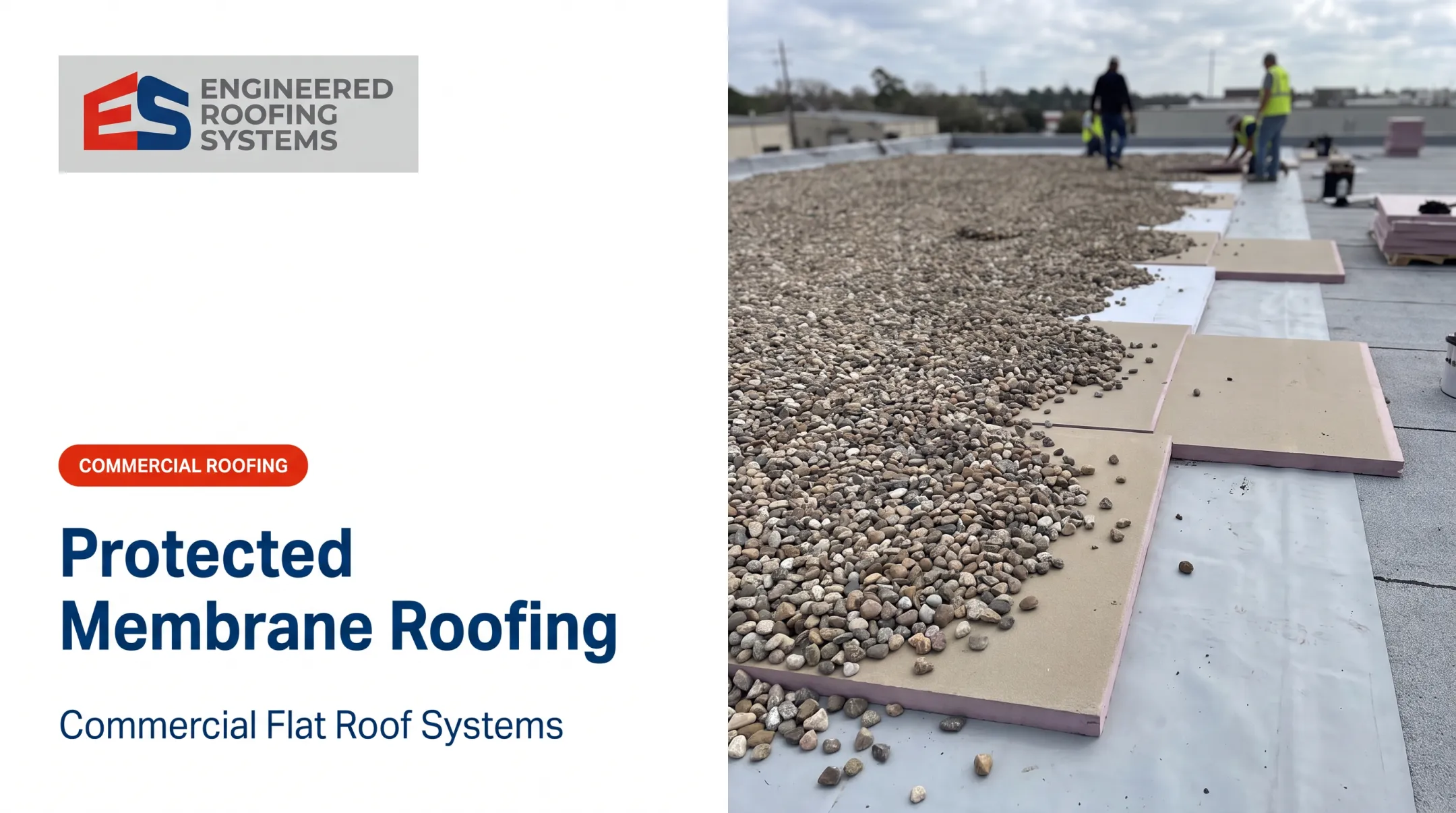
How it works: Installed fully adhered, mechanically fastened, or ballasted with stone.
Best suited for: Industrial and manufacturing facilities wanting a cost-effective membrane with minimal seam-related risk.
Key strengths:
- Highly resistant to weathering and temperature extremes
- 2025 EPDM Roofing Association survey of 569 pros: expected life 25–40+ years; some roofs still performing at 40–50 years
- Typically the lowest installation cost among single-ply options
Limitations: Standard black EPDM absorbs heat unless a reflective coating is applied, which works against cool-roof goals. Seams can be vulnerable if not properly sealed or maintained over time.

PVC (Polyvinyl Chloride)
PVC is a plastic-based single-ply membrane reinforced with polyester or fiberglass.
How it works: Seams are heat-welded, creating a strong, chemical-resistant bond throughout the roof surface.
Best suited for: Facilities dealing with rooftop grease, chemical exposure, or exhaust—think restaurants, food processing plants, and manufacturing facilities.
Key strengths:
- Excellent weldability for consistent, strong seams
- Strong fire resistance, with some products earning Class A ratings
- Better acid and chemical resistance than TPO in many applications
Limitations: Higher cost than TPO or EPDM, plus environmental concerns tied to chlorine content in manufacturing. Most manufacturer warranties still exclude damage from grease, animal fats, or jet fuel.
We installed a 40-mil Duro-Last PVC system at Capital Grille in Houston for waterproofing performance in a demanding commercial kitchen environment.
Modified Bitumen
Modified bitumen is asphalt-based rolled roofing reinforced with polymers for added flexibility and strength.
How it works: Applied via torch, hot asphalt, cold adhesive, or self-adhering "peel and stick" sheets, depending on the project and site conditions.
Best suited for: Buildings wanting proven asphalt-based waterproofing without the added labor of a full built-up system.
Key strengths:
- Strong puncture resistance for facilities with rooftop equipment or traffic
- Easier and faster installation than traditional BUR
- Budget-friendly compared to premium single-ply options
Limitations: Shorter lifespan than most single-ply membranes, and torch-applied installation carries fire risk. The National Roofing Contractors Association recommends avoiding direct torching where hazards can't be properly managed, favoring hot- or cold-applied methods instead.
We include modified bitumen among our full-replacement options and evaluate the safest application method during our free inspection.
Built-Up Roofing (BUR)
BUR consists of multiple alternating layers of asphalt and felt or fiberglass, topped with a gravel or reflective cap sheet.
How it works: Redundant layers mean one failed layer doesn't immediately cause a leak, giving BUR a long track record on large commercial roofs.
Best suited for: Large industrial and warehouse roofs where long-term durability outweighs faster installation timelines.
Key strengths:
- Multiple redundant layers add real protection margin
- Strong UV and fire resistance over decades of use
- Long-standing history in commercial and industrial applications
Limitations: Heavy installation adds structural load that some buildings can't accommodate, and leaks can be difficult to pinpoint under gravel surfacing.

How to Choose the Right Flat Roof Material
The right material depends on your building's use, budget, and local climate, not what's trending. Weigh these factors:
- Facility type and rooftop traffic: Walkable roofs need puncture-resistant materials like PVC
- Local climate: Consider hail exposure, extreme heat, and ponding water risk
- Budget: Balance installation cost against long-term maintenance expenses
- Desired lifespan and warranty terms: Some manufacturer warranties run up to 30 years
- Energy priorities: Decide if reflective coatings and cooling savings matter for your operation
Manufacturer certification matters here too. We're an authorized installer for Versico, Carlisle, and Duro-Last, and hold Versico Gold Medal Contractor status for three consecutive years. That certification directly affects warranty eligibility.
Our Keating Chevrolet project, for example, carries a 20-year Versico No-Dollar-Limit warranty—coverage that only comes through certified installation.

What to Check Before Finalizing a Flat Roof Material
Before signing off on a material, run through this checklist:
- Don't overspend on complexity you don't need — a simpler, proven system often outperforms an "advanced" one at the same budget
- Factor maintenance into total cost of ownership; some materials need more seam upkeep than others
- Confirm the material fits your building's weight limits and meets local building codes
- Verify warranty terms and that your installer is manufacturer-authorized so coverage stays valid
Pair the right system with a preventative maintenance program — scheduled inspections, drainage checks, and seam resealing — and a properly installed roof can last 20 years or more while those warranties stay in force.
Conclusion
Flat roof materials do more than keep water out. They protect commercial and industrial buildings from structural damage, control energy costs, and determine how often you'll face reroofing. TPO, EPDM, PVC, modified bitumen, and BUR each serve different needs, budgets, and building types.
Match the system to your building and install it with an experienced, certified contractor to extend roof life and lower long-term costs. Engineered Roofing Systems has served Southeast Texas facilities since 2000. Our team can help you evaluate which material fits your building's specific demands.
Frequently Asked Questions
What is the best roofing material for a flat roof?
It depends on your building's use. TPO and PVC are popular for energy efficiency and chemical resistance, while EPDM is favored for durability and lower material costs.
What is the longest-lasting roofing material for a flat roof?
EPDM and built-up roofing systems are often cited for the longest service life when properly maintained, with some EPDM roofs reported performing well past 40 years.
Which is better, TPO or EPDM?
TPO offers better reflectivity and heat-welded seams for energy savings. EPDM offers a longer field track record and typically lower installation costs.
What are the main types of flat roofs?
The main categories are single-ply membranes (TPO, EPDM, PVC), built-up roofing, modified bitumen, and fluid-applied coating systems.
What flat roof material can you walk on?
PVC and other reinforced single-ply membranes handle foot traffic best, especially when paired with walkway pads in high-traffic zones.
How much slope is needed for a flat roof?
Most flat roofs require a minimum slope of about a quarter-inch per foot to allow proper drainage and prevent ponding water from shortening membrane life.